
Design trade-offs and experiences
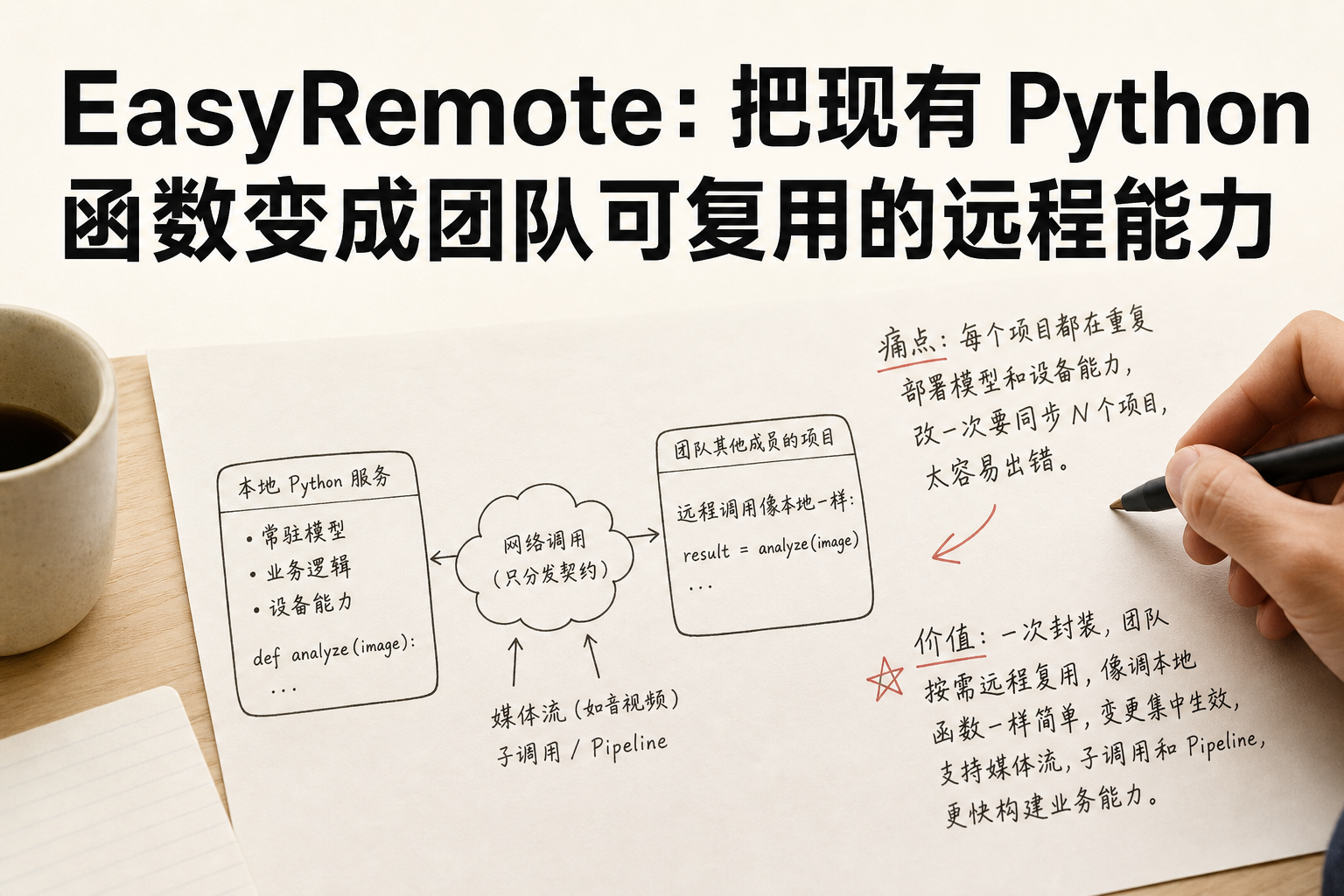
The most valuable abstractions often come from repetitive access work. Quoting rules are already functions, so first turn the function into a callable contract; models are initialized in the process, so let the host own them. What this truly reduces is the consumer's repeated environment setup and glue-code maintenance work, and whether the benefits hold can be validated by a second caller’s access process.
Output design and execution location are equally important. The data residency case returns a summary of up to 160 characters, constrained tags, and a call identifier, while the original record is kept locally. This example inspires defining a releasable result first, then connecting to data sources; current name substitution and keyword rules are only the adapter starting point—real summary quality requires evaluation with actual tasks.
Tests also remind me to break down “looks usable” into observable facts: whether the schema preserves default values, whether media bytes arrive unchanged, whether old startup affects the new host, whether the generated interface includes implementation. The client already uses polling and random selection based on discovered candidates to distribute calls; if we want to allocate by VRAM or by GPU load, we also need resource facts and admission policies. Being clear about what’s missing next helps focus expansion on real bottlenecks.
No comments yet